
Spinal Cord Stimulators overview
Using neuromodulation to manage chronic pain
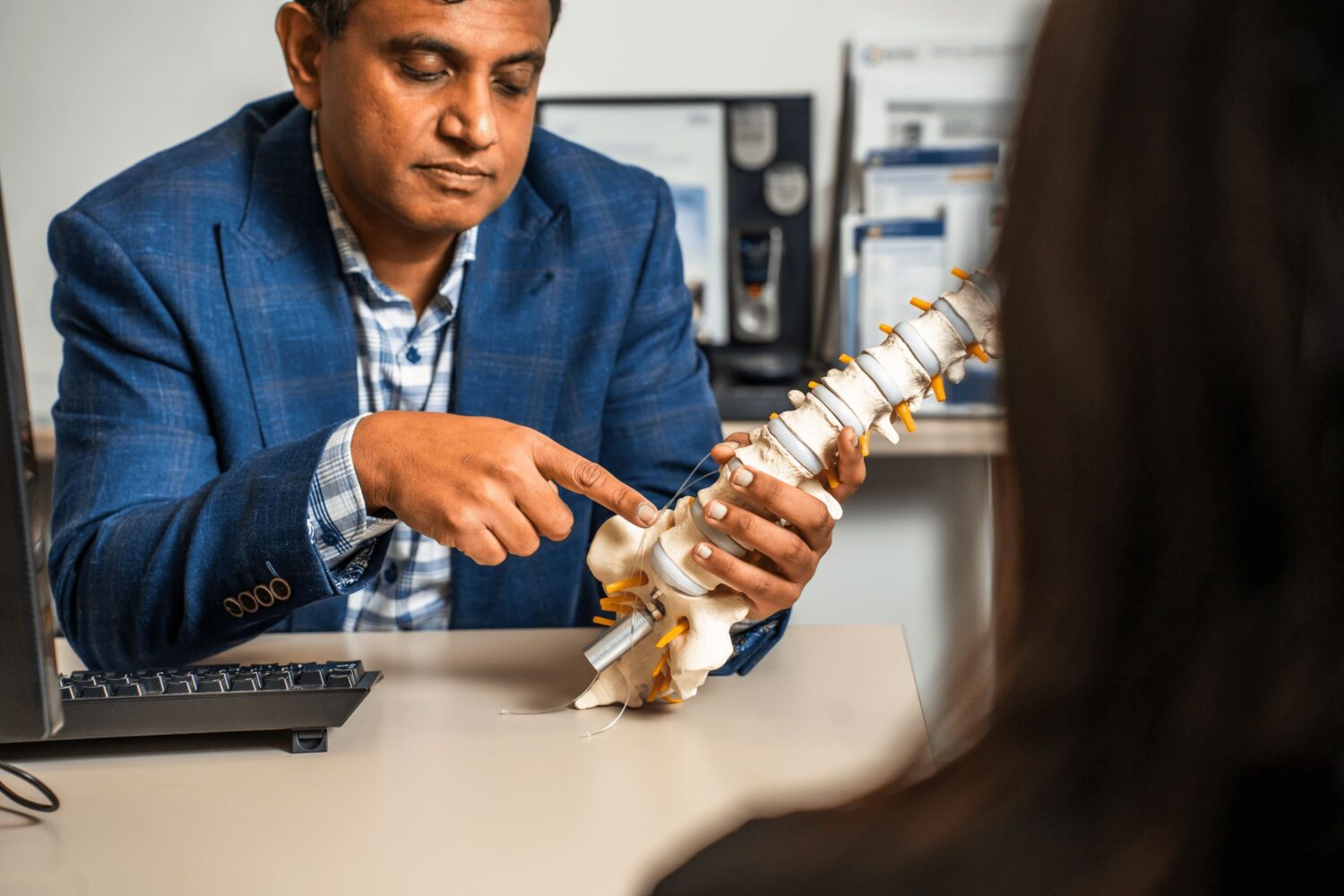
Spinal cord stimulation (SCS) is a technique for providing relief from chronic pain associated with a range of medical conditions. The treatment was developed in the late 1970s based on what is now known as the field of neuromodulation, which is also used in another similar treatment technique called peripheral nerve stimulation.
Neuromodulation is a mechanism for changing pain signal transmission in the spinal cord using small electric currents delivered to the cord using small electrodes.
Research indicates that, although it does not help everyone, on average pain is reduced by around 50%, and around 65% of patients report decreased pain after having a spinal cord stimulator implanted.

Spinal cord stimulator indications and preparation
Preparing for spinal cord stimulation
Spinal cord stimulation may help manage pain associated with:
- Angina
- Neuropathic pain
- Complex regional pain syndrome
- Pain from previous spinal surgery, often affecting the leg.
- Post laminectomy syndrome
Pain may not always be completely eliminated. However, where pain is substantially reduced, spinal cord stimulation may help reduce reliance on pain medication.
Spinal cord stimulation is often recommended where other treatments have not helped.
Before the procedure, you will be asked to complete a pain chart and pain diary covering a 7-day period. The pain chart identifies the parts of your body affected by pain, while the diary records your pain levels and any changes each day. You will also complete a short survey describing the type of pain you experience.
You should also:
- Avoid other medical procedures, such as dental treatment or a colonoscopy, within 48 hours before or after the procedure.
- Not eat, drink or smoke during the 6 hours immediately before the procedure. Regular medication may be taken with small sips of water.
- Not take diabetes medication until after the procedure.
- Stop medication containing aspirin or other blood thinning medication at least 11 days before the procedure.
- Not drive yourself to or from the appointment.
Please let us know ahead of the procedure if:
- You have any allergies.
- You have high blood pressure.
- You have or have previously had bleeding or blood clotting issues, such as deep vein thrombosis (DVT) or pulmonary emboli.
- You are taking any antibiotics.
- You have a pacemaker or defibrillator.
- You are ill, in which case we may need to postpone the procedure.
After your spinal cord stimulator procedure
Recovery and monitoring after the procedure
You will need to stay in hospital for 1-2 days after the final procedure. Full recovery can take up to 6 weeks, with daily gentle exercise, such as walking. We will also provide you with an information sheet on the implantable pulse generator and what you must avoid (for example metal detectors at security checkpoints).
After both stages there will be some pain at the insertion site for around 48 hours. During this time you should not lift anything, and not stretch, twist or bend over further than 45 degrees. The dressing on the incision must be kept dry (i.e. no showers or baths) and you will be checked frequently for any signs of infection at the insertion site.
You should arrange a visit to your doctor 3-4 days after surgery to review the incision site and to have any stitches removed. At the 6-8 week mark we will make an appointment for you to come in for a review.
Ready to take the next step?
 Comprehensive pain assessments
 Individual treatment planning
 Medication review and optimisation